5 min read
Families in crisis contact more than one community, and the fastest, most caring responder usually wins the tour and the admission.

Co-Founder & CPO
Yes, responding first to family inquiries measurably increases memory care admissions. The Lead Response Management Study found that even a modest delay, comparing a 30-minute response to a 5-minute one, sharply cuts the odds that a family qualifies as a lead, a finding detailed in the data below.
Why Does Speed Matter More in Memory Care Than Almost Anywhere Else?
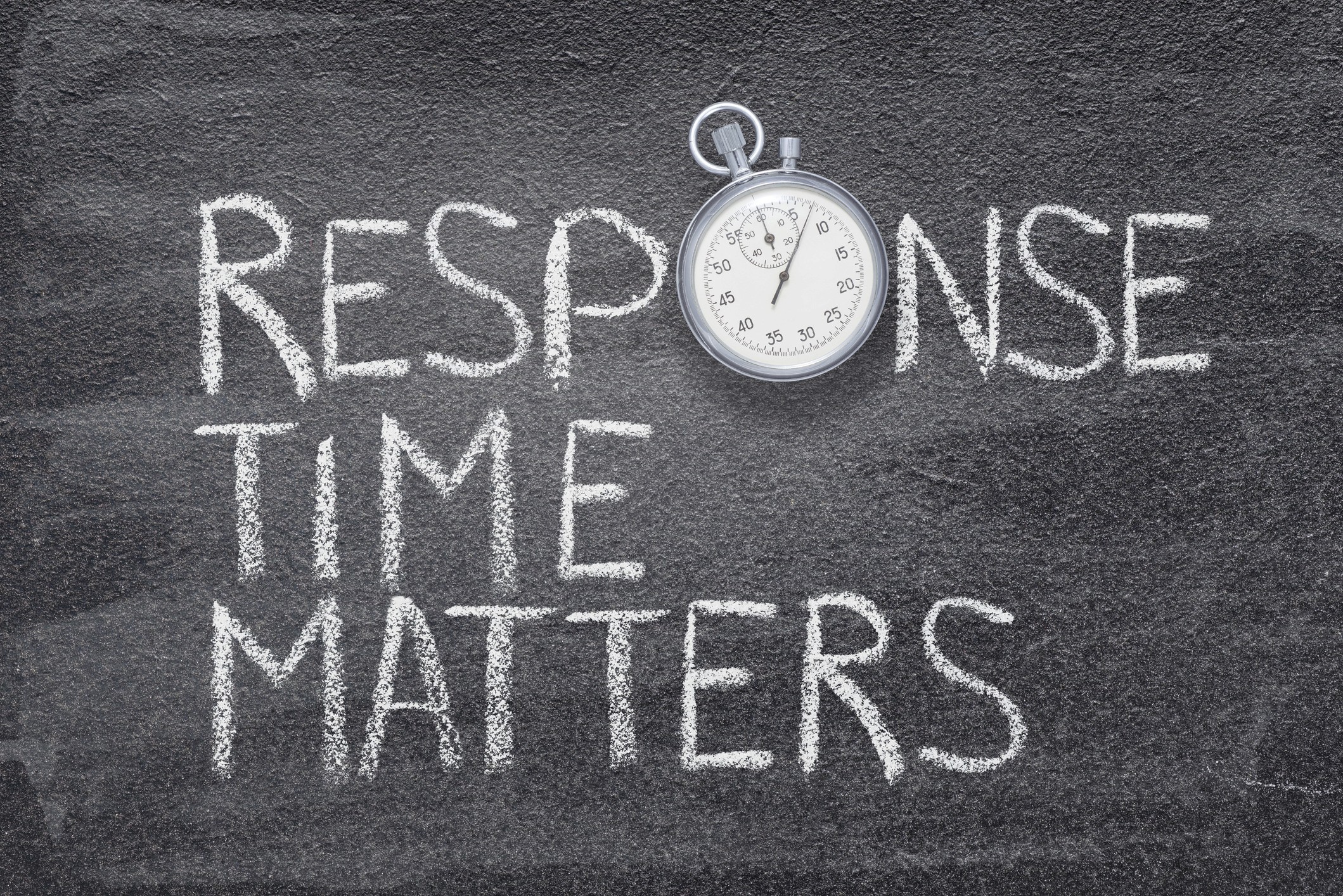
A memory care search almost always starts with a crisis: a wandering incident, a fall, or a caregiver who can no longer manage safely at home. Research from Harvard Business Review and the Lead Response Management Study found that families contacted within five minutes convert into qualified leads far more often than those reached a half hour later (Harvard Business Review, Lead Response Management Study).
Families rarely browse memory care communities the way they might explore independent living over several months. When a physician recommends a higher level of support, or a safety scare forces the issue, the search compresses into days, sometimes hours.
Administrators sometimes underestimate this part. Families aren't being indecisive. They're doing real due diligence under pressure, and due diligence favors whoever shows up first with a caring, informed answer. Memory care admissions teams that treat every inquiry as urgent, at any hour, tend to convert more of that early interest into tours.
These speed-to-lead numbers were first studied outside senior care, but they hold up inside it too. If anything, the emotional stakes in memory care amplify how much an immediate, compassionate response means to a family member who feels like they're out of options.
The First Conversation Sets the Tone for Everything That Follows
A fast first response does more than win a scheduling race. It signals to a frightened family member that someone is paying attention right now, not eventually. That immediacy matters because trust in memory care decisions forms in the first exchange, not the fifth, and a delayed reply reads as inattentiveness even when it isn't.
This isn't about replacing the human touch with automation. The goal is simply timing: making sure a caring response, human or AI-assisted, arrives the moment it's needed rather than hours later, once the family has already moved on to the next name on their list.
Picture a daughter who just learned from her mother's physician that living alone isn't safe anymore. She's scared and exhausted, and that night she submits inquiries to three communities. One responds within ten minutes with a warm message. Another calls back the next morning. The third sends a form email two days later.
She already knows which one she trusts. That reflects how fear works, not a knock on the slower two: whoever offers reassurance first tends to anchor everything that follows.
This matters more in memory care than in almost any other senior living category, because families aren't shopping for an amenity package. They're choosing a home for someone living with a progressive, often frightening disease, and the trust required for that choice is enormous. The person moving in becomes a resident, not just a patient, and every message either builds that trust or chips away at it.
Technology Closes the After-Hours Response Gap
Admissions teams can't staff every hour a family might call, and that gap costs real leads. A voicemail-abandonment analysis cited by destinationCRM, a call-center industry publication, found that roughly 80% of callers routed to voicemail hang up without leaving a message (destinationCRM). We could not locate an independent government or academic study confirming this exact figure, so treat it as a vendor-reported estimate rather than audited research.
Chat, Voice, and the After-Hours Gap
This is the gap AI engagement tools are built to close. Alita's chat and voice agents answer inquiries within seconds, whether they arrive at 2 in the afternoon or 2 in the morning, asking about the family's situation and offering to schedule a tour.
Some families reach out over text message or social media instead of a web form or phone call, especially adult children juggling caregiving with a full-time job. An admissions strategy that only covers phone and email misses that traffic entirely, which is why covering every channel, not just answering email faster, has become part of the first-response conversation.
The goal isn't to replace your admissions team. It's to make sure nothing slips through while they're asleep or in a meeting. Alita's Smart Intake hands coordinators a full conversation summary the next morning: the family's name, their situation, and often a tour already on the calendar.
AI voice technology does the same job on the phone. When a family calls after hours, Alita's voice agent has a natural conversation about their needs and captures what your team needs for follow-up, instead of routing the caller to a voicemail box most people won't use anyway.
Referral sources notice this too. Hospital discharge planners and case managers, working under pressure to place patients quickly, develop real preferences for communities that respond fast and thoroughly. A community known for slow callbacks eventually falls off that shortlist. One known for responsiveness climbs it.
See Alita in action
Book a quick demo and watch every inquiry turn into a booked tour, consultation, or interview.
Does Faster Response Actually Increase Tour Conversions?
Yes. The Lead Response Management Study found that a 30-minute response instead of a 5-minute response makes a lead roughly 21 times less likely to qualify (Lead Response Management Study), and that gap tends to compound by the time a family decides whether to tour at all.
In memory care, qualifying a family means more than confirming budget. It means understanding the resident's stage of cognitive decline, any wandering or fall history, and whether the family needs memory support today or is planning ahead. A fast, accurate first response sets up a much better tour, because the team already knows what to show and what to ask.
Response Time and Qualification Odds
The table below summarizes that research on response speed and lead qualification. It isn't memory-care-specific data, but the underlying behavior, people losing confidence the longer they wait, applies directly to families vetting a community for a parent or spouse.
Response Time | Relative Likelihood of Qualifying the Lead | Source |
|---|---|---|
Within 5 minutes | Baseline, highest odds | Lead Response Management Study |
Within 30 minutes | Sharply lower (see finding above) | Lead Response Management Study |
In practical terms, a family that gets a warm reply within minutes is far more likely to book a tour with your community, and far more likely to arrive at that tour already leaning your direction. A family that waits hours often tours somewhere else first, and first impressions are hard to unseat.
The tour decision is largely made before a family sets foot on campus, since first impressions form during that opening exchange and rarely reverse without an equally strong counter-experience during the visit. The conversation that decides whether a family shows up at all is usually the one nobody times or measures.
The Cost of Not Being First
Being late to respond usually means losing the admission entirely: the first community to respond has already begun building the trust that closes the decision. At a national median memory care cost of about $6,690 a month, reported by A Place for Mom in 2025 (A Place for Mom), even one or two missed admissions a month adds up quickly.
That math compounds quietly. If roughly 80% of after-hours callers who reach voicemail hang up without leaving a message, as the vendor-reported figure above suggests, and the median memory care resident represents about $6,690 in monthly revenue, an unstaffed after-hours line isn't a minor service gap. It's a recurring revenue exposure sized directly to your after-hours call volume.
Consider a rough illustration, not a cited research finding. A community losing just one to two admissions a month to faster-responding competitors, at that same $6,690 monthly rate, is leaving somewhere between $80,000 and $160,000 a year on the table. Run your own inquiry volume and close rate through the same math, since the real number depends entirely on your community's specifics.
The family who tours with the community that responded first has often already formed a favorable impression before arriving. Competing against that head start with a same-day or next-day callback is an uphill climb, even with a great building and a great team.
There's also a cost you can't put in a spreadsheet. Referral partners and past-tour families talk to each other, and a reputation for slow follow-up spreads quietly through word of mouth long before it shows up in your occupancy numbers.
How Do You Build a Culture That Sustains Fast Response?
Technology gets you instant response capability, but culture is what keeps a team using it well. Communities with consistently fast response times tend to share one trait: everyone, from the executive director to the front desk, treats a new inquiry as the priority of the moment, not an interruption to it.
That shows up in specific ways:
Admissions coordinators can step out of internal meetings for a live inquiry
Backup coverage exists whenever the primary coordinator is unavailable
Response-time goals are tracked weekly and discussed openly, not buried in a report nobody reads
New hires learn why speed matters in their first week, not their first year
It also means investing in the systems that make speed possible: a CRM that routes leads instantly, mobile alerts for new inquiries, and a dashboard like Alita's Hub that gives leadership visibility into response times across every channel, not just the phone.
None of this requires adding headcount. It requires making the team you already have faster and more consistent, which is often a bigger win than hiring another coordinator.
Communities that get the most out of AI-assisted intake tend to treat it as a floor, not a ceiling: a guarantee that someone responds immediately, with a human follow-up close behind once the AI has done the first, urgent job of engaging the family.
How Do You Measure Your First-Response Performance?
You can't improve what you don't track, and most communities are tracking less than they think. Four numbers matter most:
Average time to first response for web inquiries
Phone answer rate during and after business hours
Share of inquiries answered within one hour
Share of inquiries answered within five minutes
Setting Progressive Targets
If your current average is 12 hours, don't try to jump straight to five minutes. Aim for six hours first, then two, then one, then fifteen minutes. Many communities find the drop from 12 hours to two, usually through basic process fixes and automated acknowledgment, produces the biggest single gain in conversions.
Seasonal timing matters too. Inquiry volume in memory care tends to rise after the winter holidays, when adult children spend extended time with aging parents and notice cognitive changes they hadn't caught before. Those post-holiday inquiries are often the highest-intent leads of the year, and they deserve the fastest possible response.
Training matters as much as the technology behind it. Everyone touching the admissions process, not just the coordinator, should understand that a new inquiry usually means a family in crisis, and that the window to engage them is measured in minutes. Our piece on how response time affects assisted living occupancy walks through the same dynamic in a related setting, and this look at chat agents and call volume in memory care covers the channel side of the equation. If staffing gaps are part of what's slowing your response times down, the true cost of nurse vacancies in memory care is worth reading next.
Being first matters because it's the clearest signal of attention a frightened family will receive that day. Every minute you shave off your response time is a concrete way of saying: we see you, we understand the urgency, and we're ready to help. To see the reasoning behind how Alita built its platform around that idea, visit why Alita.
Summary
Responding first to a family's memory care inquiry is one of the strongest, most controllable levers a community has for winning more tours and admissions. Families searching for memory care are usually in a crisis moment, and the Lead Response Management Study shows just how sharply a delayed reply can cut a family's odds of qualifying as a lead, a finding detailed above. Fast response builds trust before a competitor even calls back, and tools like Alita's chat and voice agents help communities answer every inquiry, day or night, without waiting on business hours. Combine that speed with a culture that treats every inquiry as urgent, and with clear response-time metrics, and first response becomes a lasting admissions advantage rather than a lucky break.
More from Alita
See all blog posts
4 min read
Why AI Chat Agents Outperform Offshore Human Agents in Home Care

2 min read
Alita Accepted into AgeTech Collaborative™ from AARP Accelerator Program

5 min read
15 High-Impact Places to Display Positive Reviews for Home Care Agencies

5 min read
The Essential Guide to Google Reviews for Home Care Providers

8 min read
The Essential Guide to Ranking on Google: For Home Care Providers
4 min read
Alita Welcomes Longevity Market Pioneer Mary Furlong to Advisory Board